Infection and response
Work through one section at a time. Higher-only material is labelled explicitly; optional challenges can also use Foundation content.
 GCSE BIOLOGY · AQA TRILOGYTutor dashboardSaves on this device
Your answers save automatically as you work.
Saved in this browser on this device.
How do infections spread, and how do we stop them? Explore pathogens, your body’s defences, vaccines and medicines, then apply the science to original exam-style questions.
Supported GCSE version · Clear examples, worked calculations and optional challenges.
Work through one section at a time. Higher-only material is labelled explicitly; optional challenges can also use Foundation content.
A tiny organism or virus that causes infectious disease.
Able to spread between living things. Another word is infectious.
The person, animal or plant that a pathogen infects.
An organism that carries a pathogen between hosts. A mosquito can carry the protist that causes malaria.
A poison made by a living organism, such as a bacterium.
A molecule, often on the surface of a pathogen, that the immune system can recognise.
A protein made by white blood cells. Its binding sites fit a particular antigen.
An antibody that attaches to a toxin and stops it causing harm.
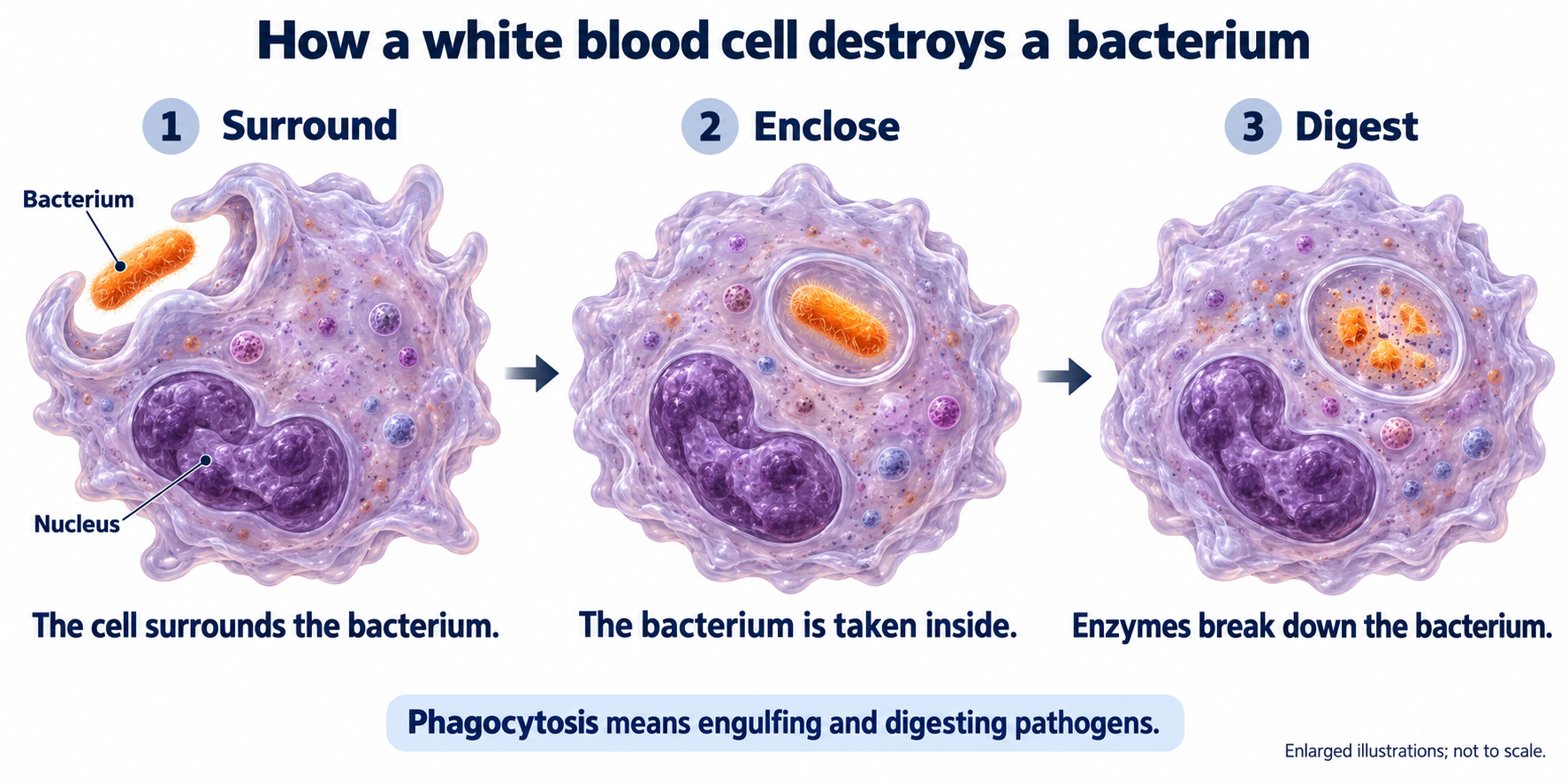
A cell surrounding a pathogen, taking it inside and digesting it.
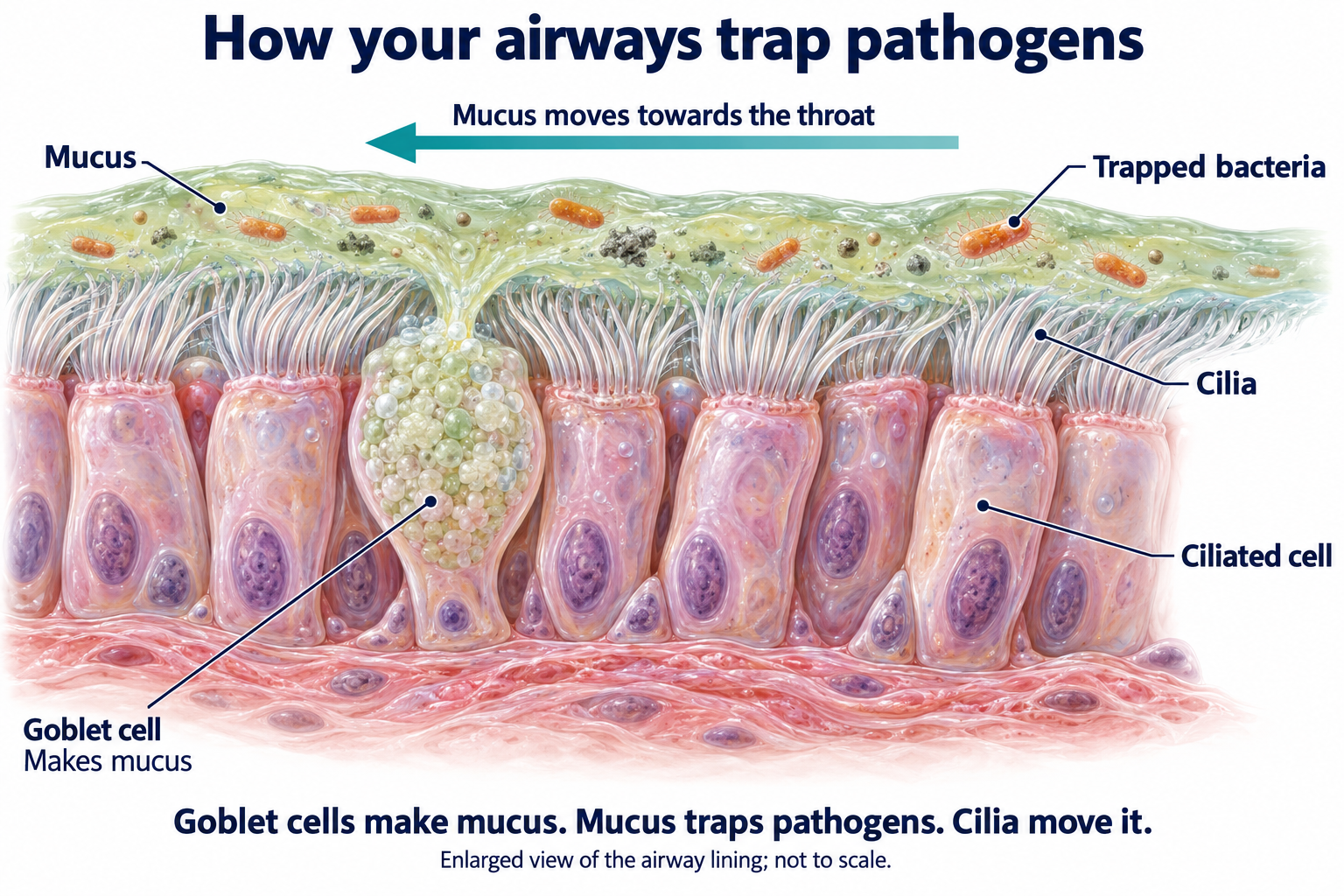
A sticky substance that traps dust and pathogens in your airways.
A cell in the lining of your airways that makes mucus.
Tiny hair-like structures that beat to move mucus towards the throat.
A preparation that helps your immune system recognise and remember a pathogen, so it can respond quickly in future.
A medicine that kills bacteria or stops them growing. It does not kill viruses.
Bacteria or other pathogens that survive a treatment that would normally kill them.
How well a medicine works.
How harmful a substance is.
A treatment that looks like the medicine being tested but contains no active drug.
A trial in which neither the patients nor the people checking the results know who received which treatment.
Independent scientists checking research before it is published.
Some diseases can pass from one person to another, or between plants. These are called communicable diseases. They are caused by pathogens — tiny disease-causing organisms or viruses.
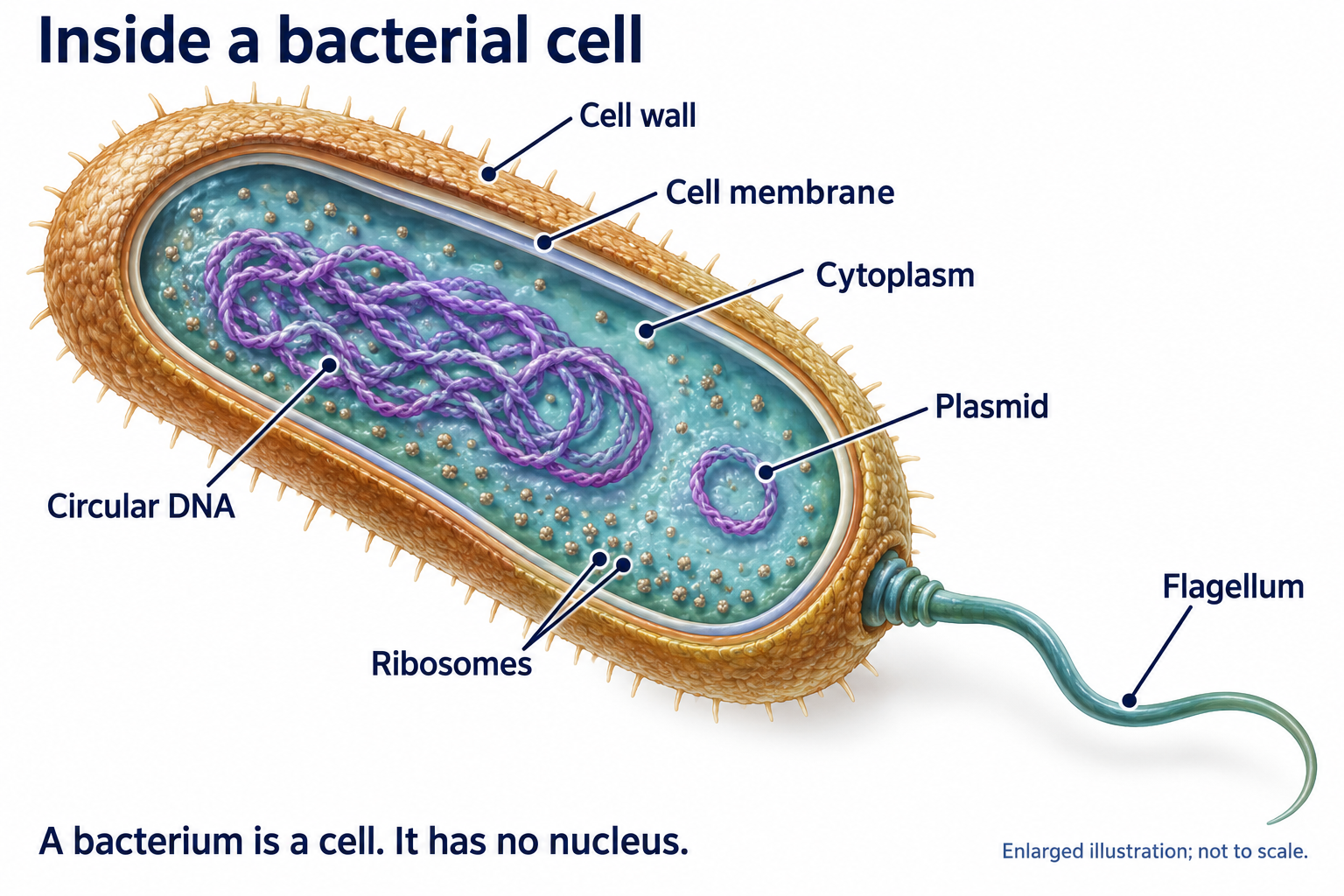
The four groups you need to recognise are bacteria, viruses, fungi and protists. They can infect animals or plants. The living thing they infect is called the host.
Not all microorganisms cause disease. Many bacteria are useful, including some that live in your gut.
| Group | How it causes disease | Example |
|---|---|---|
| Bacteria | Bacterial cells can multiply quickly. Some release toxins — poisons that damage body tissues. | Salmonella; gonorrhoea |
| Viruses | Enter living cells and use the cell’s structures to make more viruses. This damages the cells. | Measles; HIV; tobacco mosaic virus |
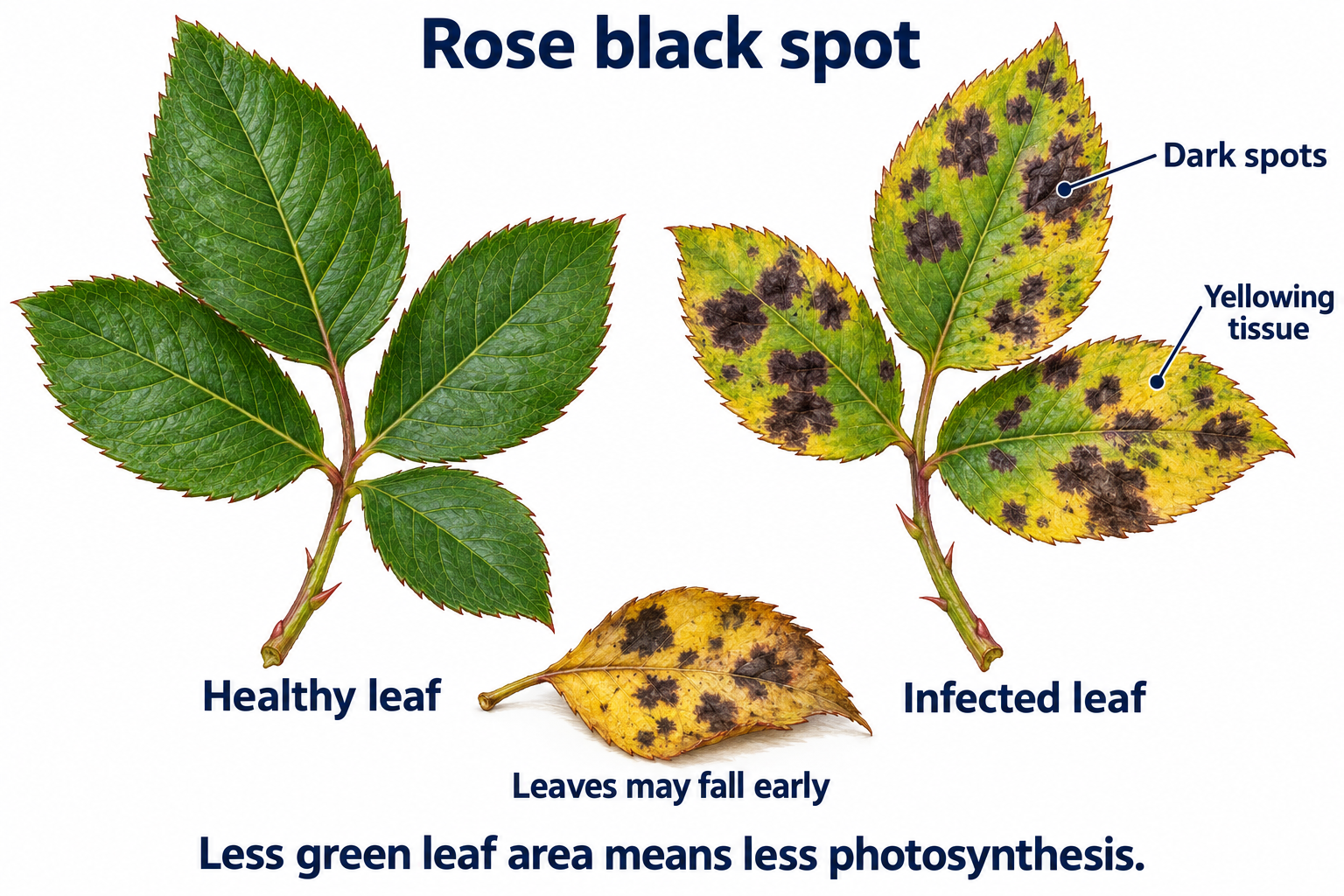
| Fungi | Grow on or in a host. Some make spores — tiny structures that spread and grow into new fungi. | Rose black spot |
| Protists | Some are parasites: single-celled organisms that live in or on a host and take nutrients from it. | The protists that cause malaria |
Think about how a pathogen reaches its next host. Stopping that journey helps stop the disease spreading.
| Route | Example | How spread can be reduced |
|---|---|---|
| Air | An infected person coughs or sneezes out droplets. Another person breathes them in. | Cover coughs, let fresh air into rooms and reduce contact with infected people. |
| Water | People drink water containing pathogens. | Treat drinking water and prevent sewage entering supplies. |
| Direct contact | Pathogens pass through touching infected material or through sexual contact. | Wash hands, clean equipment and use barriers such as condoms where appropriate. |
| Food | Pathogens enter the body in contaminated food. | Cook food thoroughly, wash hands and prevent cross-contamination. |
| Vectors | An animal carries a pathogen from one host to another. | Avoid bites and reduce places where the carrier can breed. |
Isolation means keeping an infected person away from others while they could pass on the disease. Hygiene means actions such as washing hands and cleaning shared surfaces. Both reduce contact with pathogens.
For each disease, ask four questions: What causes it? How does it spread? What does it do? How can we control it?
| Disease | Spread | Effects and control |
|---|---|---|
| Measles | Breathing in droplets from coughs and sneezes. | Fever and a red rash. Measles can lead to serious illness and can be fatal. Vaccination helps protect children and reduce spread. |
| HIV | Sexual contact or infected body fluids entering the body, for example blood on shared needles. | At first, HIV may cause a flu-like illness. It damages immune cells and can lead to AIDS. Antiretroviral medicines slow the virus making copies of itself. Condoms and not sharing needles reduce spread. |
| Tobacco mosaic virus (TMV) | Contact with an infected plant, or hands and tools carrying the virus. | Patchy light and dark areas form on leaves. This “mosaic” pattern can appear on tomato leaves. Less photosynthesis means less growth. Cleaning tools and removing infected plants help limit spread. |
HIV is the virus. It attacks cells that normally defend the body. Without effective treatment, the damage can become so severe that the person struggles to fight other infections and some cancers. This late stage is called AIDS. HIV does not spread through everyday contact, such as sitting together in a classroom.
Why does TMV slow plant growth? Damaged leaves carry out less photosynthesis. They make less glucose, a sugar the plant uses for respiration and to build new plant material. Less glucose means less growth.
| Disease | Effects | Spread and control |
|---|---|---|
| Salmonella food poisoning | Fever, stomach cramps, vomiting and diarrhoea. The bacteria and their toxins cause illness. | Spreads in food containing the bacteria. Thorough cooking and clean food preparation reduce spread. Poultry, such as chickens, are vaccinated in the UK to help control salmonella. |
| Gonorrhoea | Pain when urinating and a thick yellow or green discharge may occur. | Spreads through sexual contact. Condoms reduce spread and suitable antibiotics treat the infection. Many strains now survive penicillin, so it does not work against every strain. |
Cross-contamination means pathogens moving from one food or surface to another. Imagine chopping raw chicken and then salad on the same unwashed board. Bacteria can move onto the salad, which will not be cooked. Cleaning the board or using separate boards helps prevent this.
Rose black spot is caused by a fungus. Dark purple or black spots appear on rose leaves. The leaves may turn yellow and fall off early.
The fungus produces tiny spores, which can grow into new fungi. Wind and splashes of water carry them to other leaves.
Yellow leaves absorb less light for photosynthesis. If leaves fall off, the plant also has less leaf area to absorb light. It makes less glucose and may grow more slowly.
Removing and destroying infected leaves removes a source of spores. A fungicide is a chemical that kills or stops the growth of fungi. It can help control black spot.
Malaria is caused by tiny single-celled organisms called protists. The disease can cause repeated bouts of fever and can be fatal.
A mosquito can pick up the protist when it feeds on an infected person’s blood. The protist spends part of its life cycle inside the mosquito. An infected female mosquito can then pass it to another person when it bites.
The mosquito is a vector: an animal that carries a pathogen between hosts. The protist causes malaria; the mosquito carries it.
Your body has several ways to stop pathogens getting in. These are called non-specific defences because they work against many different pathogens.
| Place | How it helps |
|---|---|
| Skin | Forms a barrier that blocks entry. Blood clots help seal cuts in the skin. |
| Nose | Hairs and mucus trap particles, including pathogens. |
| Trachea (windpipe) and bronchi (airways leading into the lungs) | Mucus traps pathogens. Tiny hair-like cilia beat to move mucus towards the throat, where it can be swallowed. |
| Stomach | Hydrochloric acid kills many swallowed pathogens. |
Inside your airways, three parts work together:
If pathogens get past these barriers, white blood cells help defend your body.
Your immune system is your body’s defence against infection. Different white blood cells help in different ways.
1. Engulfing pathogens — phagocytosis
A white blood cell surrounds a pathogen and takes it inside. Enzymes then break it down. The scientific name for this is phagocytosis.
2. Making antibodies
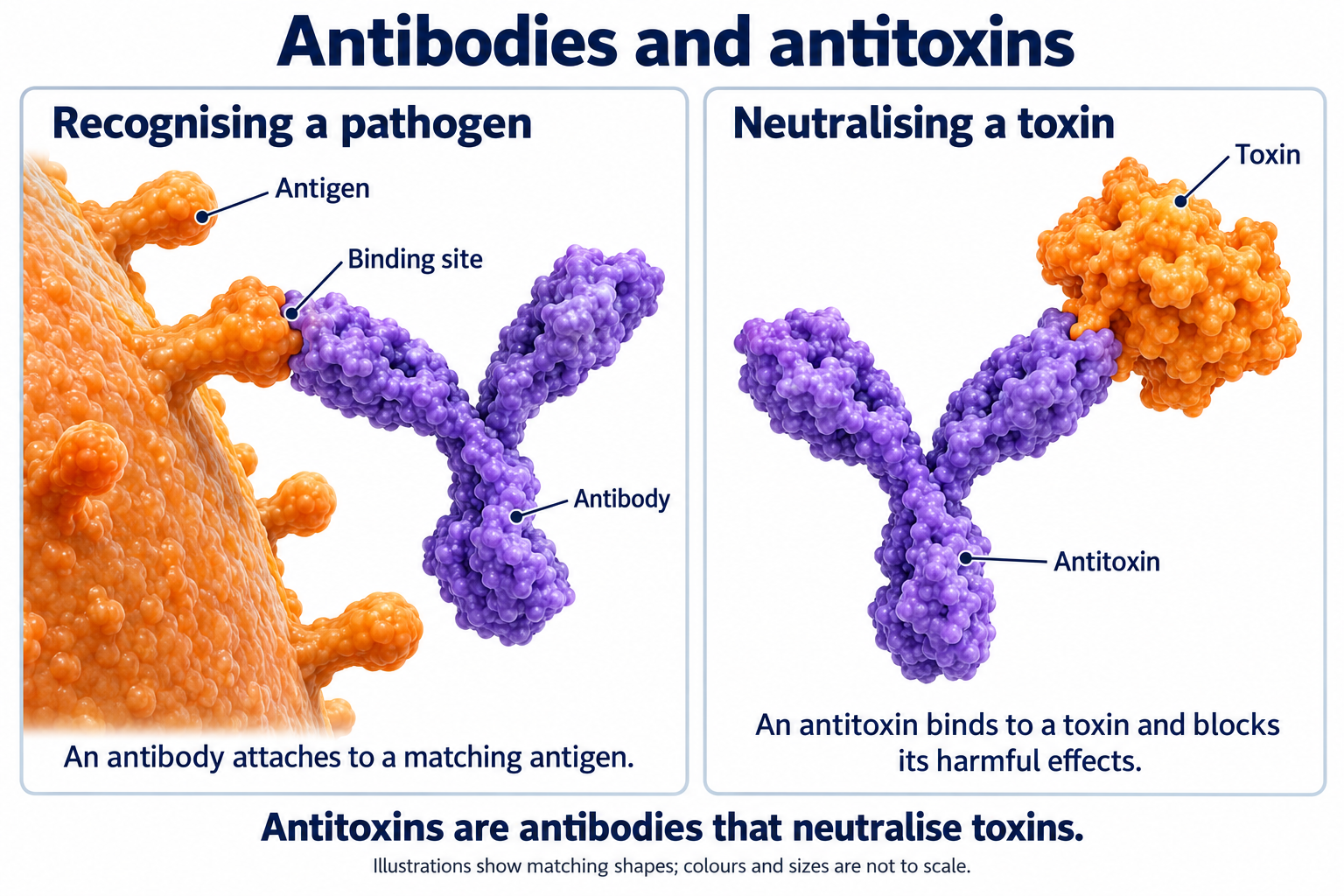
Pathogens have molecules on their surface called antigens. White blood cells can recognise these and make antibodies — proteins that attach to them.
Each type of antibody has binding sites with a particular shape. These fit a matching antigen. Attaching antibodies helps the body identify and destroy the pathogen. An antibody that fits one antigen may not fit another.
3. Making antitoxins
Some bacteria release poisons called toxins. White blood cells can make antibodies called antitoxins. These attach to toxins and stop them causing harm. This is called neutralising the toxin.
A vaccine prepares your immune system to recognise a pathogen before you catch the disease.
This faster response can destroy the pathogen before it makes you ill.
How does vaccination help other people? When many people are immune, fewer people catch and pass on the pathogen. It has fewer chances to reach someone who is not protected. This can help protect some unvaccinated people too, although it does not guarantee protection for everyone.
When judging a vaccination programme, consider how well it prevents illness, whether people can access it, its cost and how many people choose to take part.
Antibiotics are medicines that kill bacteria or stop them growing. Penicillin is one example. Different antibiotics work against different bacteria, so choosing the right one matters.
Antibiotics do not kill viruses. They target features of bacterial cells that viruses do not have. Viruses make copies of themselves inside our cells. A drug that stops this process could also harm our cells, which makes antiviral medicines harder to develop.
Painkillers reduce symptoms such as pain. They do not kill the pathogen. Feeling better does not always mean the infection has gone.
Why is antibiotic resistance a problem? Antibiotics have saved many lives, but some bacteria survive an antibiotic that used to kill them. These resistant bacteria can multiply and spread.
When an antibiotic kills other bacteria, resistant survivors have less competition. They reproduce, so more of the bacteria are resistant. Using antibiotics when they are not needed makes this problem worse.
Some important medicines were first discovered by studying plants and microorganisms.
| Medicine | Origin |
|---|---|
| Digitalis | Foxglove plants; used as a heart medicine. |
| Aspirin | Developed from chemicals found in willow; used as a painkiller. |
| Penicillin | Alexander Fleming noticed that bacteria did not grow near Penicillium mould. |
Today, chemists make most new medicines using chemical reactions. This is called synthesis. A chemical found in a plant may still provide the starting idea.
A substance that kills bacteria in a dish is not automatically a safe medicine. Scientists must check what it does inside the body and how much can be given safely.
Before a new medicine can be used, scientists need to answer three questions:
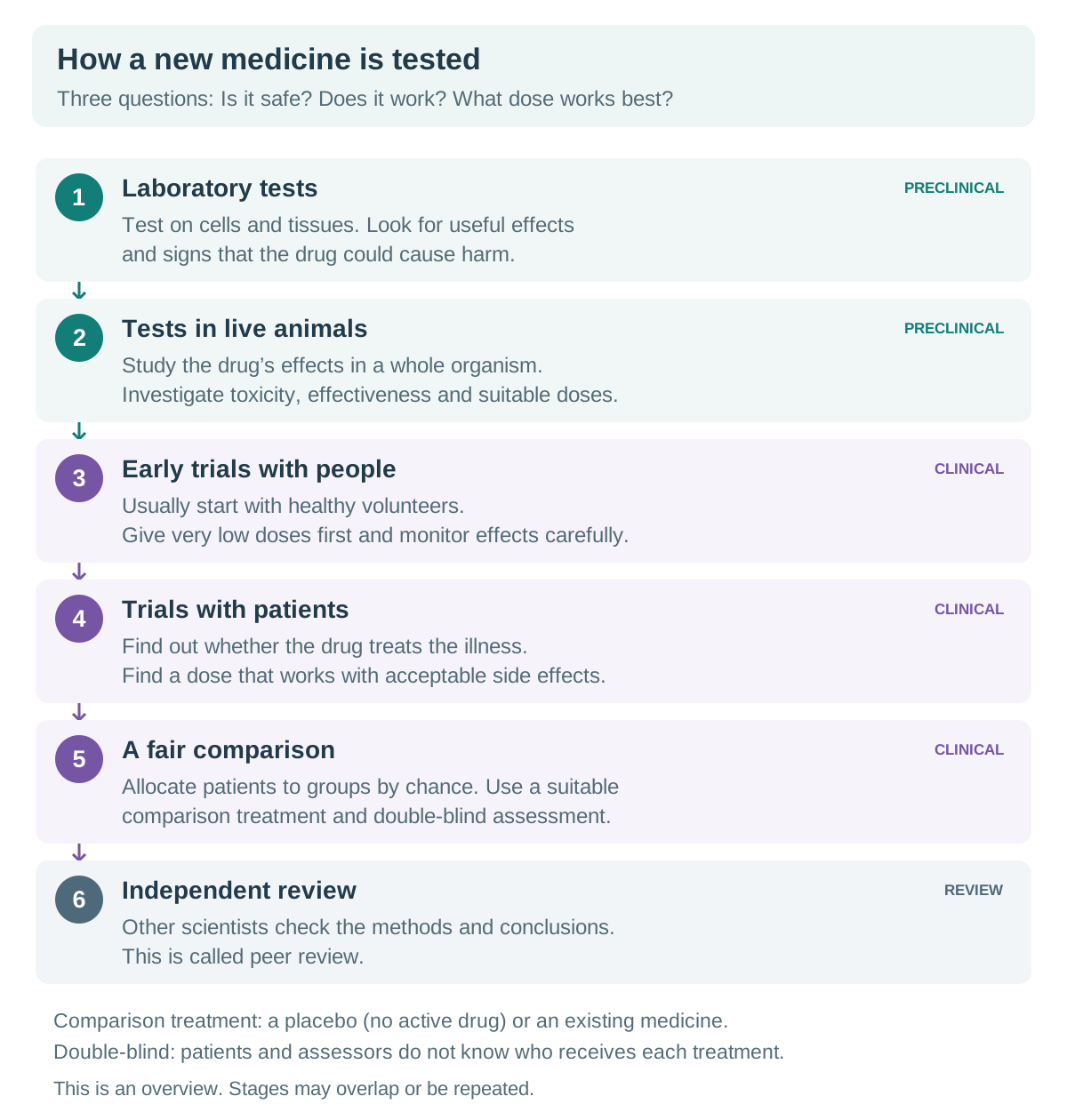
Choosing groups by chance is called random allocation. It helps avoid putting healthier patients into just one group. Testing more people makes the results less dependent on a few unusual cases. Even a well-run trial may miss rare or long-term side effects.
Use these original exam-style questions to practise explaining your ideas. The optional challenges ask you to apply the same science with less help.
In a practice study, 18 out of 300 people become ill.
Percentage ill = 18 ÷ 300 × 100 = 6%.
In another group, 12% become ill. The difference is 12 − 6 = 6 percentage points.
To find the percentage reduction, compare the fall with the original value: (12 − 6) ÷ 12 × 100 = 50%. The percentage who became ill has halved.
Before reading a graph, check what each axis shows and the units. Use numbers from the graph to support your answer. A difference between two groups does not, on its own, prove what caused it.
Writing a six-mark answer: plan the main steps, then link them together. Explain how and why things happen. Try the question before opening the example answer.
Start with the 34 main questions. Higher-only questions are labelled. You can complete this topic over several sessions; your answers save as you go. Use a hint if you get stuck, then compare your work with an example answer. Your tutor can mark written answers.
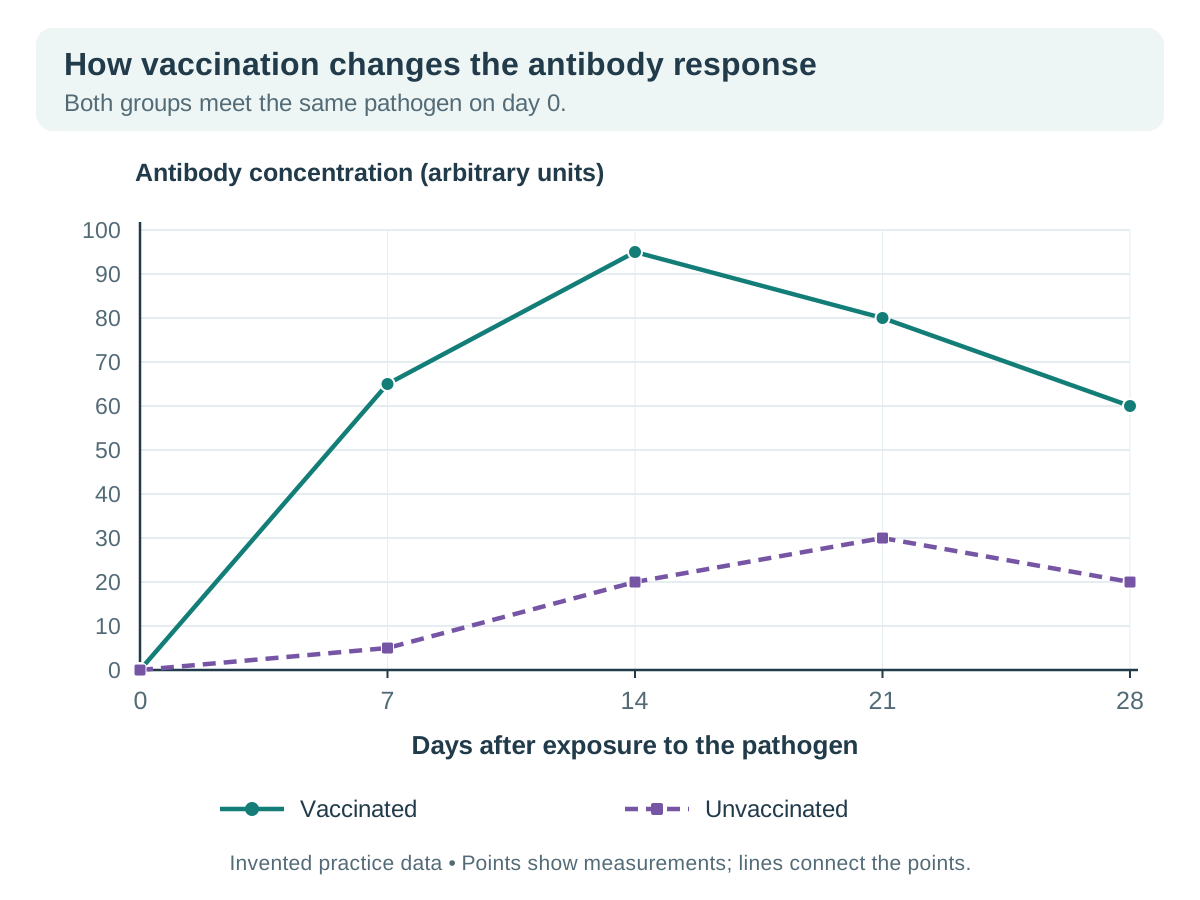
Read the graph, compare the two groups and use the evidence to explain how vaccination helps.
The vaccinated group rises faster: at day 7 it has 65 units compared with 5. Its peak is also higher: 95 units compared with 30. The vaccine helped the immune system recognise the pathogen and left memory cells. These allow the correct antibodies to be made faster when the pathogen enters again. This can control the pathogen before it causes illness. The graph does not show how many people became ill, any side effects, or how long protection lasted after day 28.
When connected with your pupil code, your answers save online for Kevin to see. Click Submit to Kevin when you have finished. Downloads are optional.
Connect with your pupil code above to submit.
Use a scientific idea and a specific example in your reflection.